Celadon: Goryeo and Longquan celadon
Celadon is the green-glazed stoneware of East Asia, fired in China for over a thousand years and perfected in Korea under the Goryeo dynasty. This guide explains the two great celadon traditions, Longquan in China and Goryeo in Korea, and shows the pieces we currently have for sale.
What is celadon?
Celadon is stoneware covered with a glaze coloured green by iron oxide fired in a reducing kiln. The colour ranges from pale blue-green to a deep jade green, and the best pieces have a thick, even glaze that pools slightly in carved decoration. The name comes from the French word céladon, after a character in a 17th-century French novel who wore green ribbons. Chinese and Korean potters never used the word themselves. In China the glaze is called qingci, in Korea cheongja.
Longquan celadon
The kilns of Longquan in Zhejiang made celadon from the Song dynasty onward, and by the Southern Song their thick, jade-like glaze was famous across Asia. Longquan pieces were exported in huge numbers, to Japan, Korea, Southeast Asia and as far as East Africa, and they shaped the taste for celadon everywhere they landed. Our Longquan dish below, with twin fish moulded in the centre, is a classic Southern Song form.
Goryeo celadon
Under the Goryeo dynasty (918–1392), Korean potters took the Chinese celadon glaze and made it their own. Their great invention was sanggam, inlay: designs carved into the clay and filled with white and black slip before glazing, so the pattern shows through the green glaze like a drawing. Goryeo inlaid celadon is unlike anything made in China, and it remains the most prized Korean ceramic. Our octagonal dish below is a fine example, with chrysanthemums inlaid in white and black slip on each panel.
Buying celadon
When you buy celadon, look first at the glaze: it should be even, with depth, and free of the cloudy patches that suggest a later copy. On Goryeo pieces, check that the inlay is crisp and sits under the glaze, not painted on top of it. Condition matters. Old firing flaws are normal, but chips to the rim and restored breaks reduce value. Every piece we sell is described in full, with its condition and provenance, and guaranteed as described without time limit.
Pieces for sale
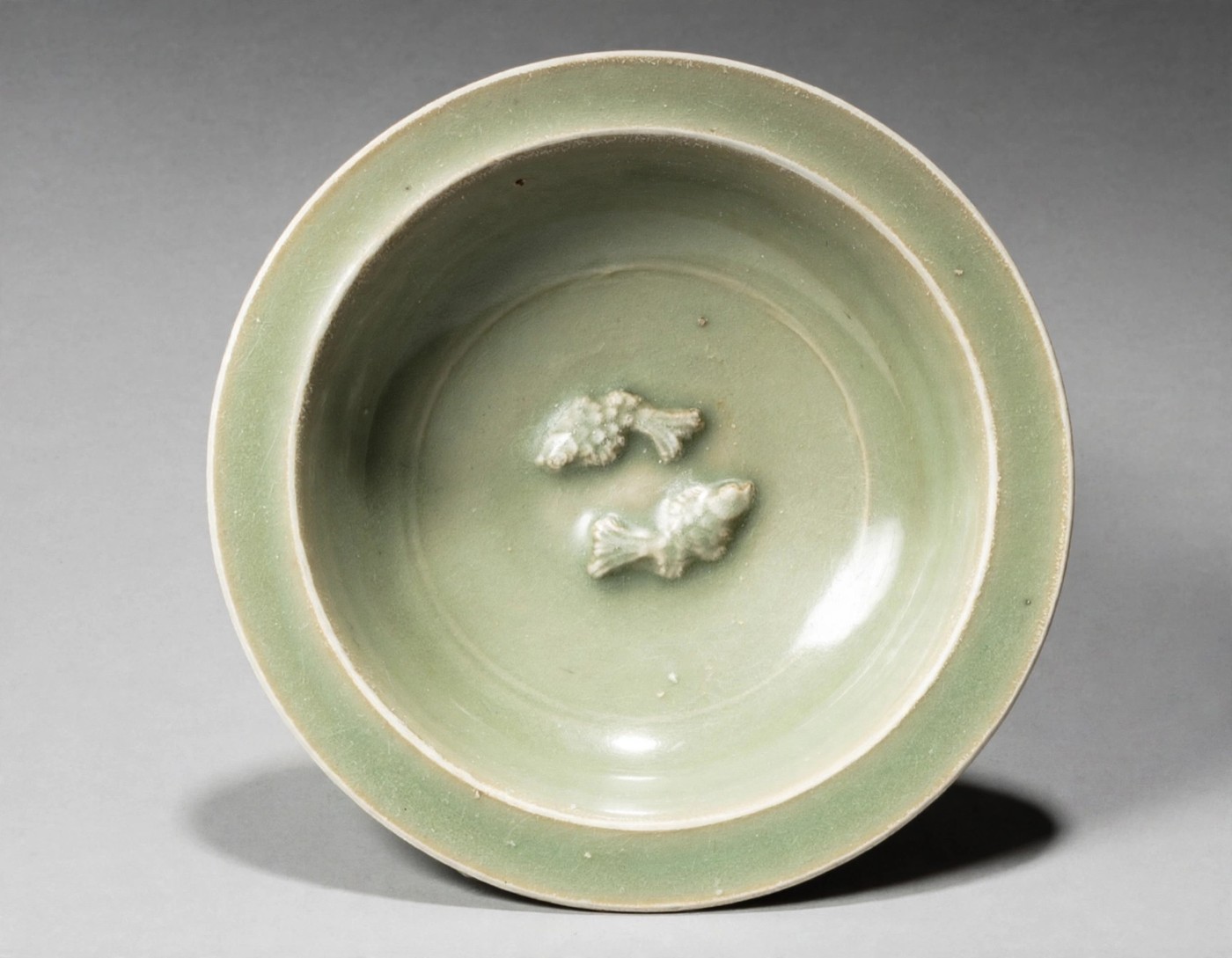
Longquan celadon "twin fish" dish
$4,100
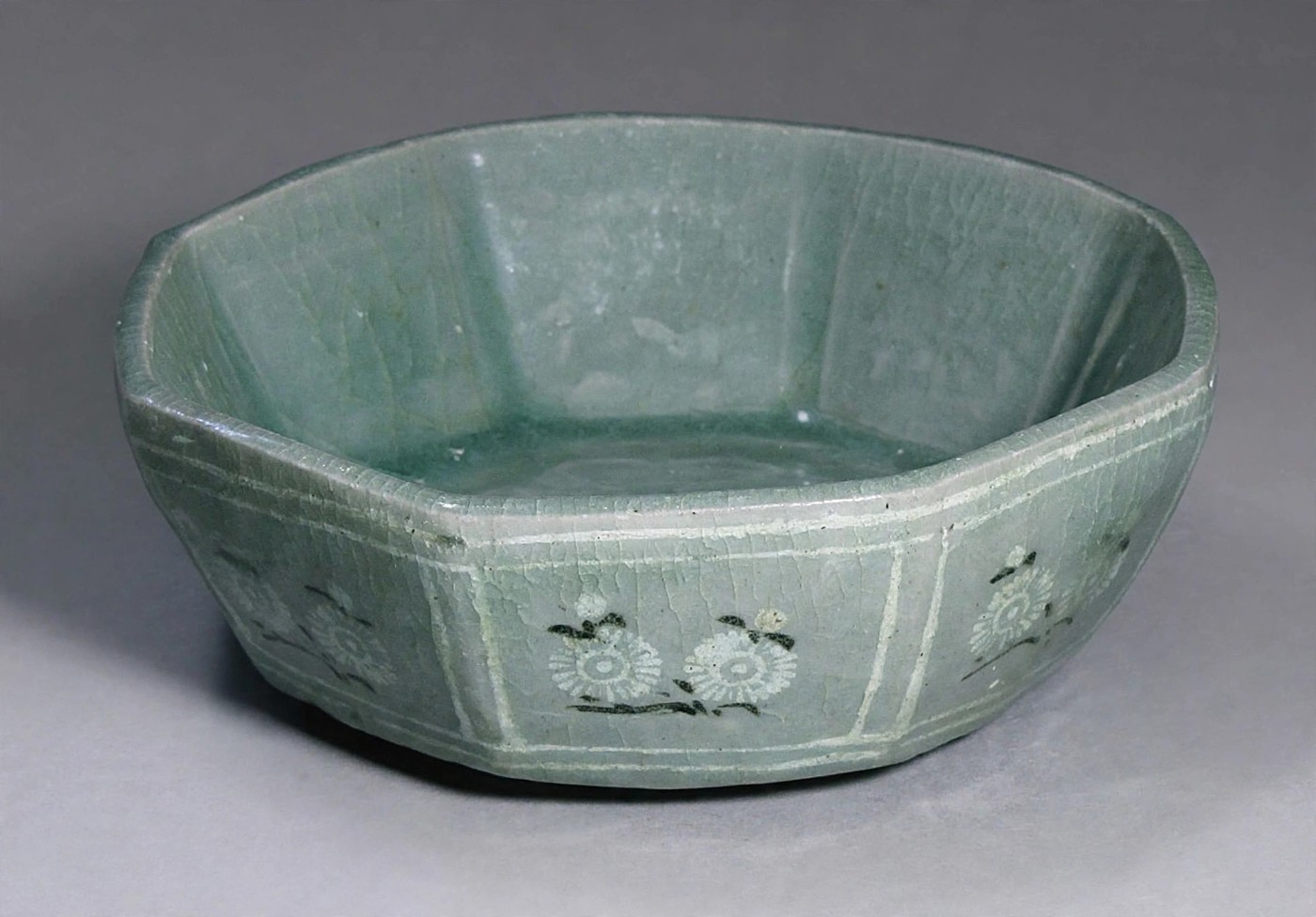
Octagonal slip-inlaid celadon dish with chrysanthemums
$2,100