Qingbai ware: Song and Yuan dynasty porcelain
Qingbai, meaning bluish white, is the pale blue-white porcelain of Song dynasty Jingdezhen, and it is where Chinese porcelain as we know it begins. This guide covers what qingbai is, how Song and Yuan pieces differ, and the two qingbai pieces we currently have for sale.
What is qingbai?
Qingbai is porcelain covered with a thin, glassy glaze that fires to a pale bluish white, pooling to a deeper blue wherever the body is carved or moulded. It was made at Jingdezhen in Jiangxi from the Song dynasty onward, and by the Southern Song the kilns there were producing it in enormous quantities: bowls, dishes, boxes and vases, many of them moulded with floral and animal designs. In the West it is sometimes called yingqing, shadow blue.
Song or Yuan?
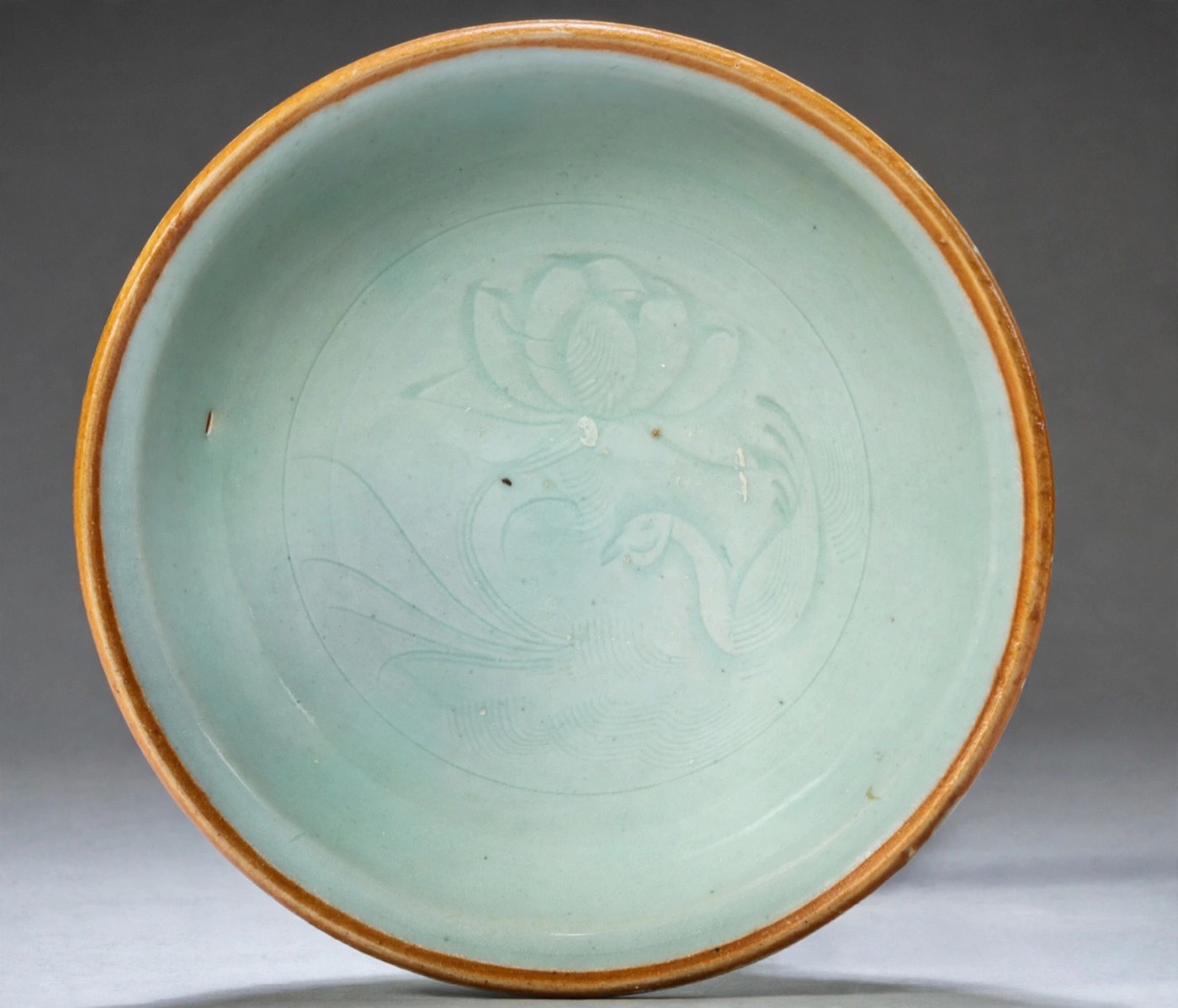
Telling Song from Yuan qingbai is one of the classic problems in Chinese ceramics. In general, Song qingbai is finer and paler, with a thin body and a soft, almost translucent glaze. Yuan qingbai tends to be heavier, with a slightly darker, bluer glaze. The dish below is a good example, and its deeper blue tone is one reason it is dated to the Yuan rather than the Southern Song. Moulded decoration is common in both periods, but Yuan pieces are often larger and bolder.
Iron-brown spots
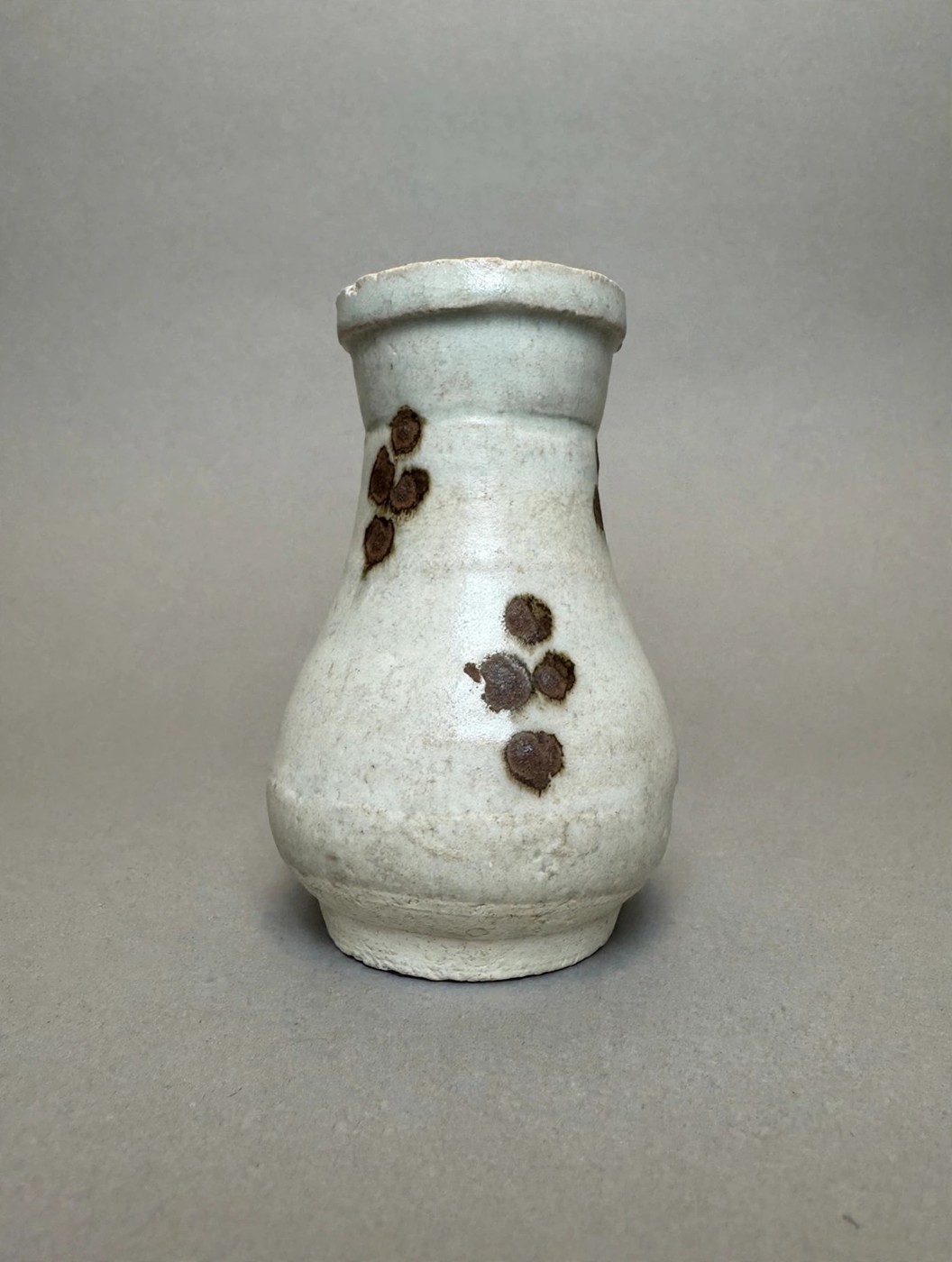
In the Yuan dynasty, Jingdezhen potters began dabbing iron-brown pigment onto qingbai before glazing, so the spots fire to a dark brown against the pale glaze. The small vase below is decorated this way: clusters of brown spots, each one dabbed on by hand. It was a popular, inexpensive form of decoration, and these little vases were made in large numbers, many for export to Southeast Asia.
Buying qingbai
Qingbai is collected for its quiet colour and its place at the start of the porcelain story. Look for a glaze that is clear and glassy rather than cloudy, and for decoration that is crisp under the glaze. Condition matters: the thin glaze chips easily at the rim, so check the rim carefully, and note that many qingbai pieces have old firing flaws, burst bubbles and small glaze flakes, that are part of how they were made. We describe every flaw we know of on each listing.