Yuan dynasty ceramics: qingbai, Cizhou and blue-and-white
The Yuan dynasty (1279–1368) is the bridge between Song elegance and Ming grandeur: the period when Jingdezhen became the centre of Chinese porcelain and blue-and-white was born. This guide covers Yuan ceramics and the four Yuan pieces we have for sale.
Jingdezhen under the Yuan
Under Mongol rule, the kilns of Jingdezhen were reorganised under imperial supervision, and production grew to an industrial scale. The pale blue-white glaze of qingbai continued, now often with a slightly darker, bluer tone, and the potters began painting in cobalt blue under the glaze: the blue-and-white porcelain that would dominate the Ming. Our two qingbai pieces are Yuan, including the lotus-and-swan dish whose deeper blue glaze marks it as Yuan rather than Song.
Cizhou and bronze
The Yuan was also a strong period for the northern kilns: Cizhou potters went on painting bold iron-brown designs over white slip, and our yuhuchunping vase, dated Jin to Yuan, shows the tradition at its best. In bronze, the archaistic revival that began under the Song continued, and our twin-handled vase, Yuan to early Ming, is a fine example of the scholar's taste in bronze.
The birth of blue-and-white
The most important Yuan development was underglaze blue: cobalt, imported from Persia, painted under a clear glaze. The earliest blue-and-white pieces are large, boldly painted dishes and jars, made partly for export to the Middle East. They are now among the most expensive of all Chinese ceramics, and the finest are in museums. But the Yuan taste for bold, painted decoration is visible in our qingbai and Cizhou pieces too.
Buying Yuan ceramics
Yuan pieces are often larger and bolder than Song ones, and they can be a good value: our Yuan pieces range from $650 to $2,500. As with Song wares, look for a clear glaze, crisp decoration, and a full condition report. We describe every piece in full and guarantee it as described, without time limit.
Pieces for sale
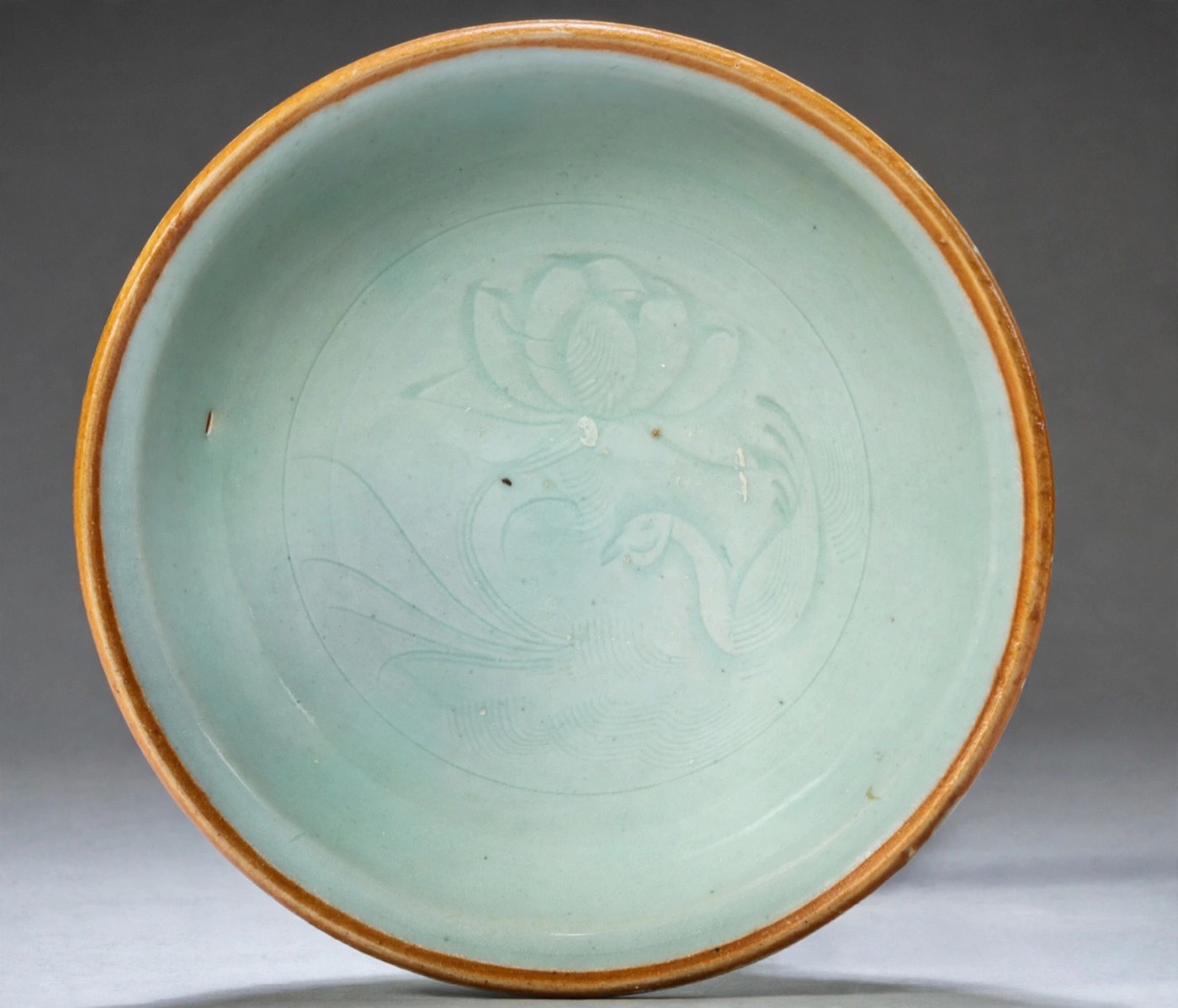
Qingbai "lotus and swan" dish
$2,200
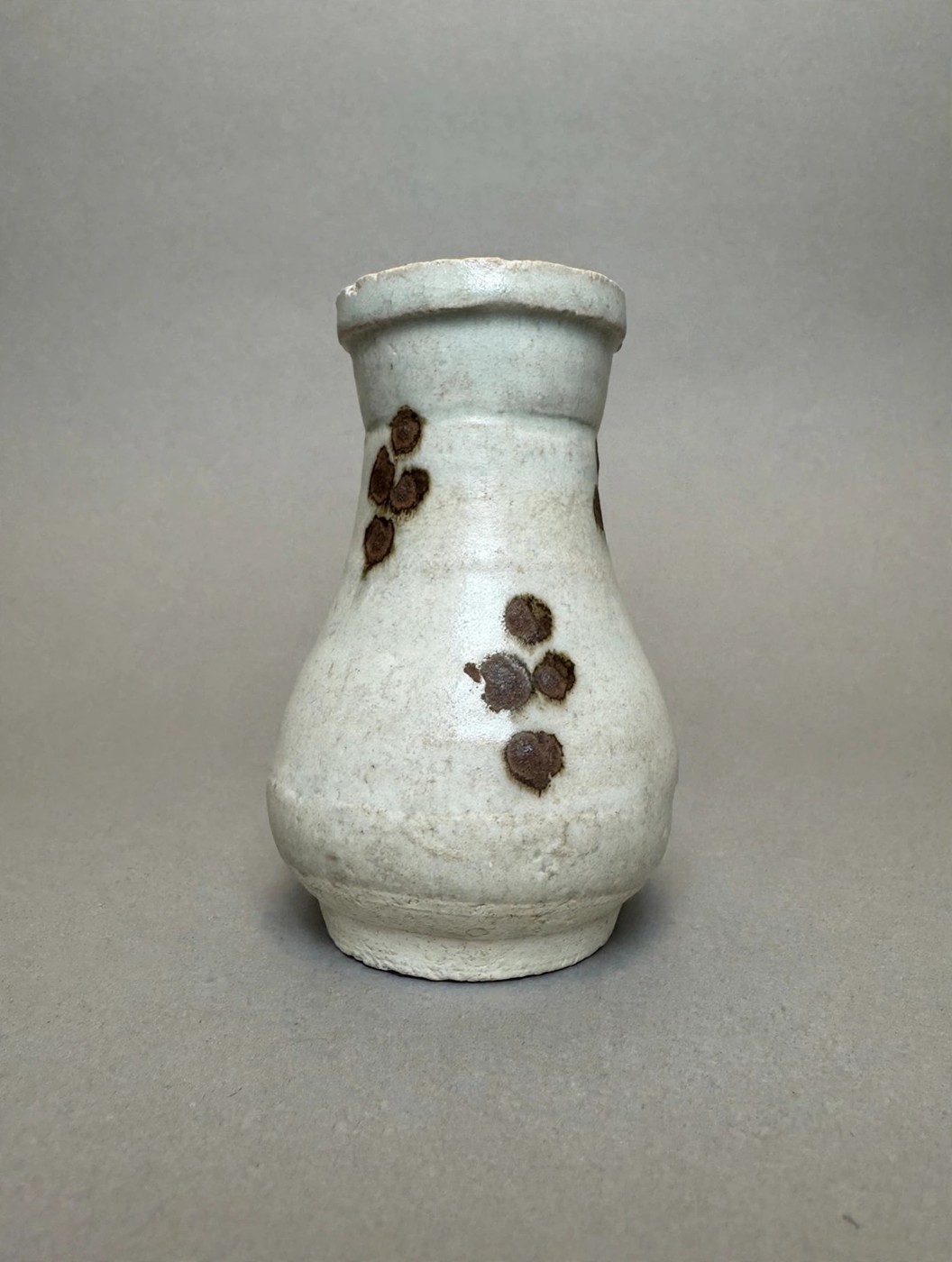
Qingbai vase with iron-brown spots
$650
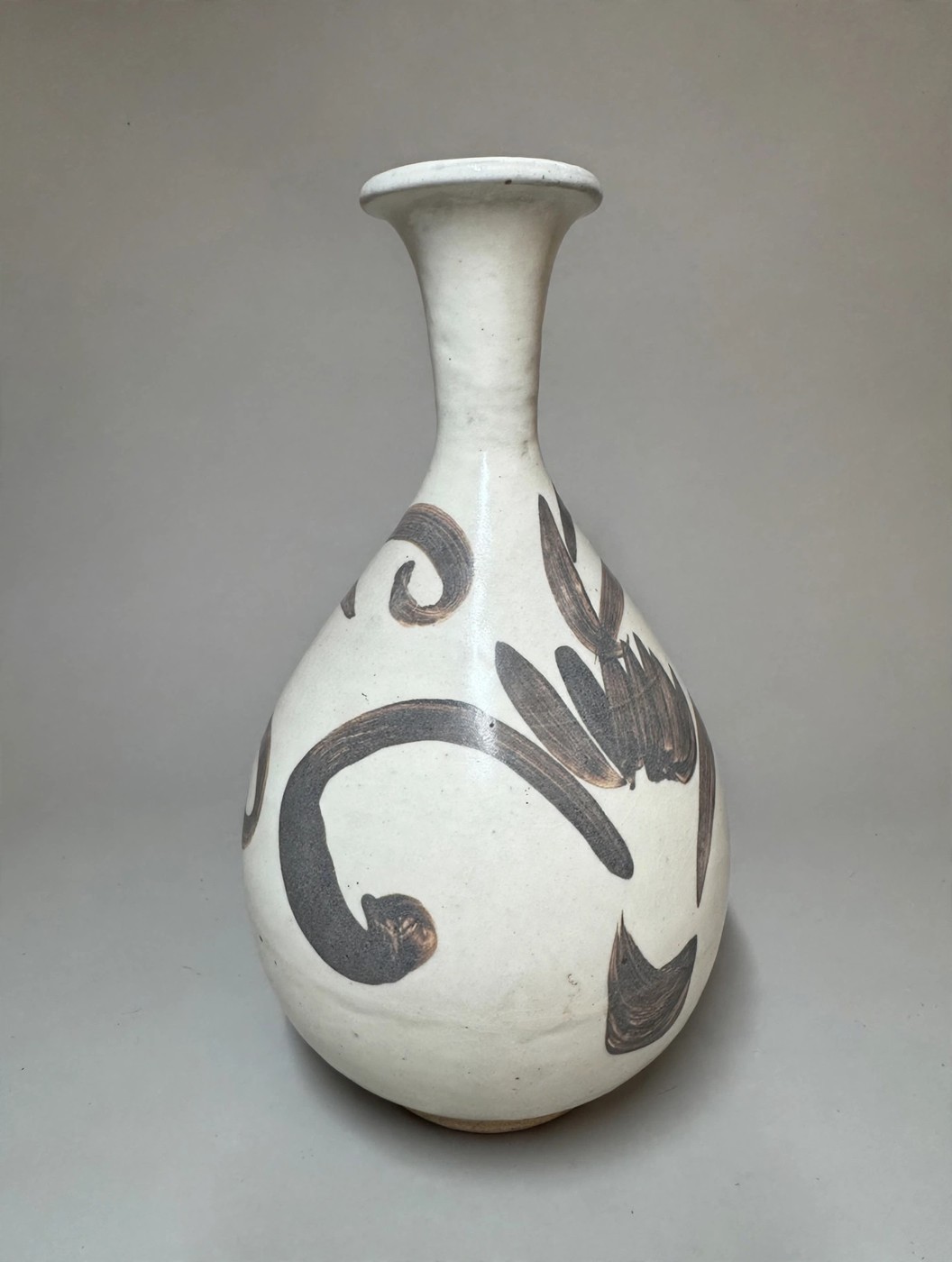
Cizhou painted pear-shaped vase (yuhuchunping)
$2,500
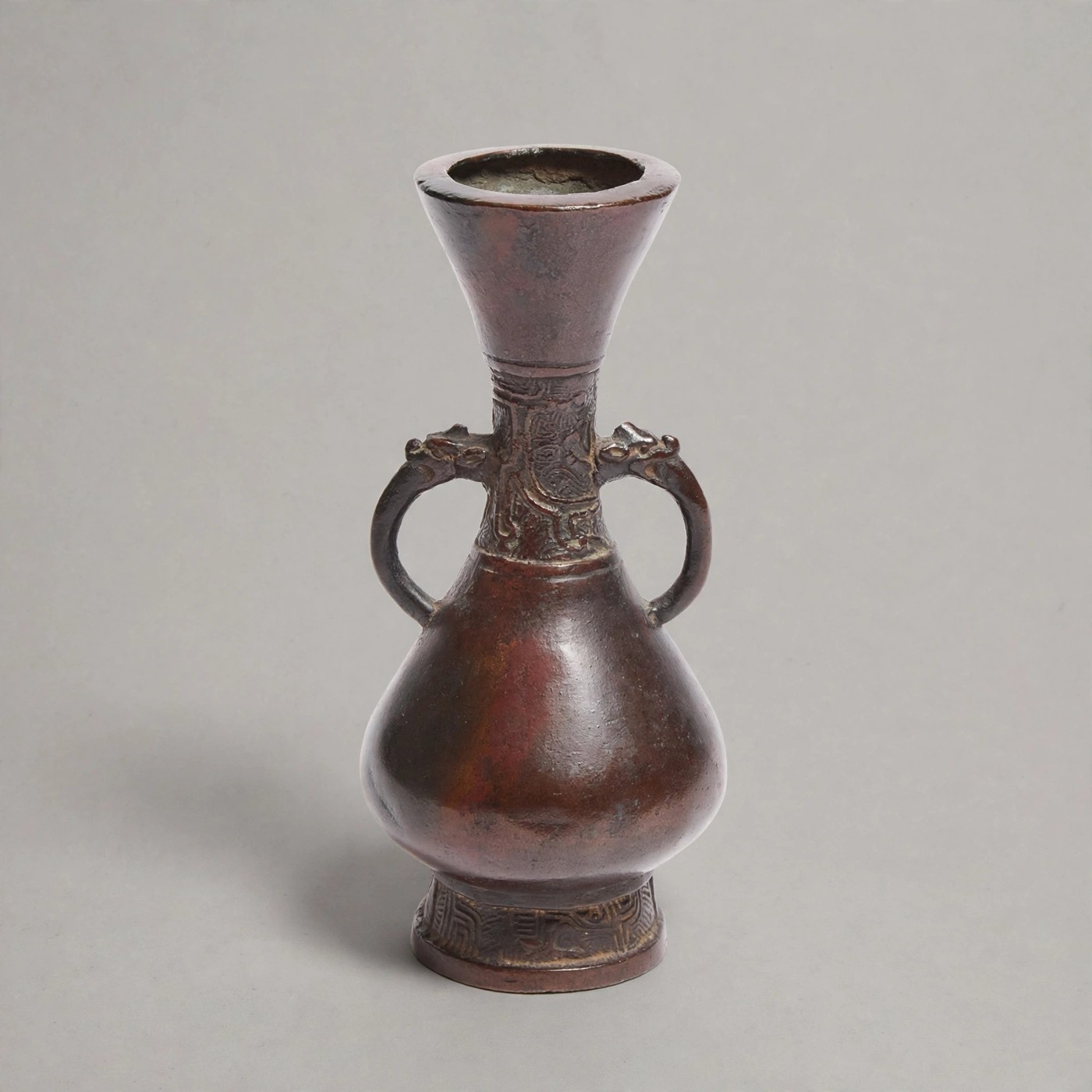
Bronze twin-handled vase
$950