Song dynasty ceramics: celadon, qingbai and tea bowls
The Song dynasty (960–1279) is the golden age of Chinese ceramics: the period when the great kilns found their voice and the scholar's taste set the standard. This guide covers the Song wares we have for sale and the ones to look for.
The golden age
Under the Song, ceramics were made for the court, for the scholar's desk, and for the tea ceremony that had become the great social ritual of the age. The kilns of the north, Ru, Guan, Jun, Ding and Cizhou, and of the south, Longquan and Jingdezhen, each developed a distinct glaze and character. Song pieces are prized for their restraint: quiet colour, fine potting, and decoration that serves the form rather than overwhelming it.
Longquan and qingbai
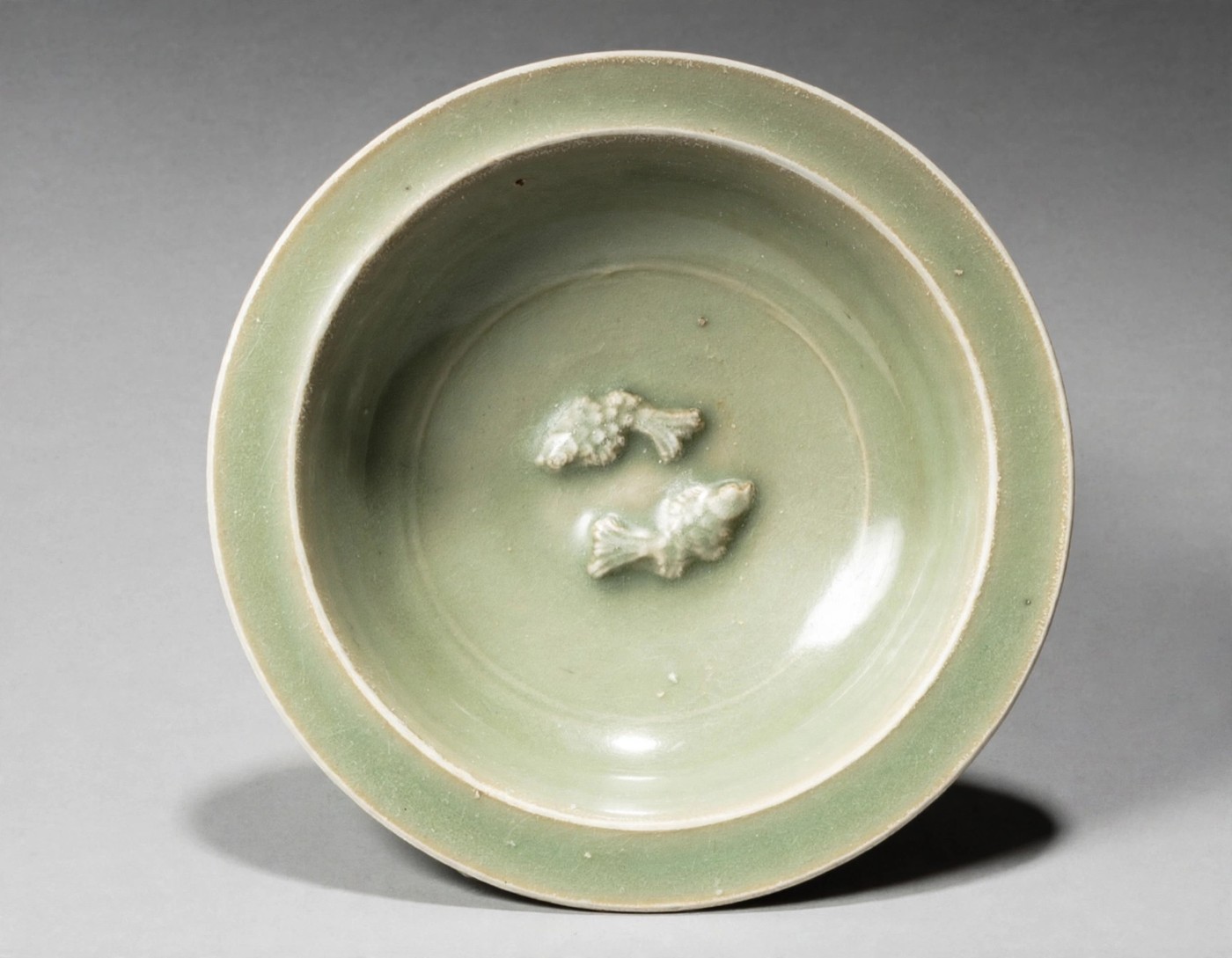
Two Song wares dominate the market today. Longquan celadon, with its thick jade-like glaze, was exported across Asia. Qingbai from Jingdezhen, pale blue-white and often moulded, was the ancestor of all later Chinese porcelain. Our Longquan twin-fish dish is a classic Southern Song piece, and our two qingbai pieces show how the ware continued into the Yuan.
Tea and the tea bowl
The Song tea ceremony, whisking powdered tea into a froth, needed dark bowls to show off the white foam, and the Jian and Jizhou kilns answered with black glazes streaked with brown. Tea bowls are among the most collected Song ceramics, and the best ones are still made to be held: small, thick-walled, and heavy in the hand.
Buying Song ceramics
Song ceramics are the most collected of all Chinese ceramics, and the market is deep, but so are the copies. Buy from a dealer who describes condition and provenance in full, and who guarantees what they sell. Our Longquan dish is $4,100, and it is described in full and guaranteed as described without time limit.