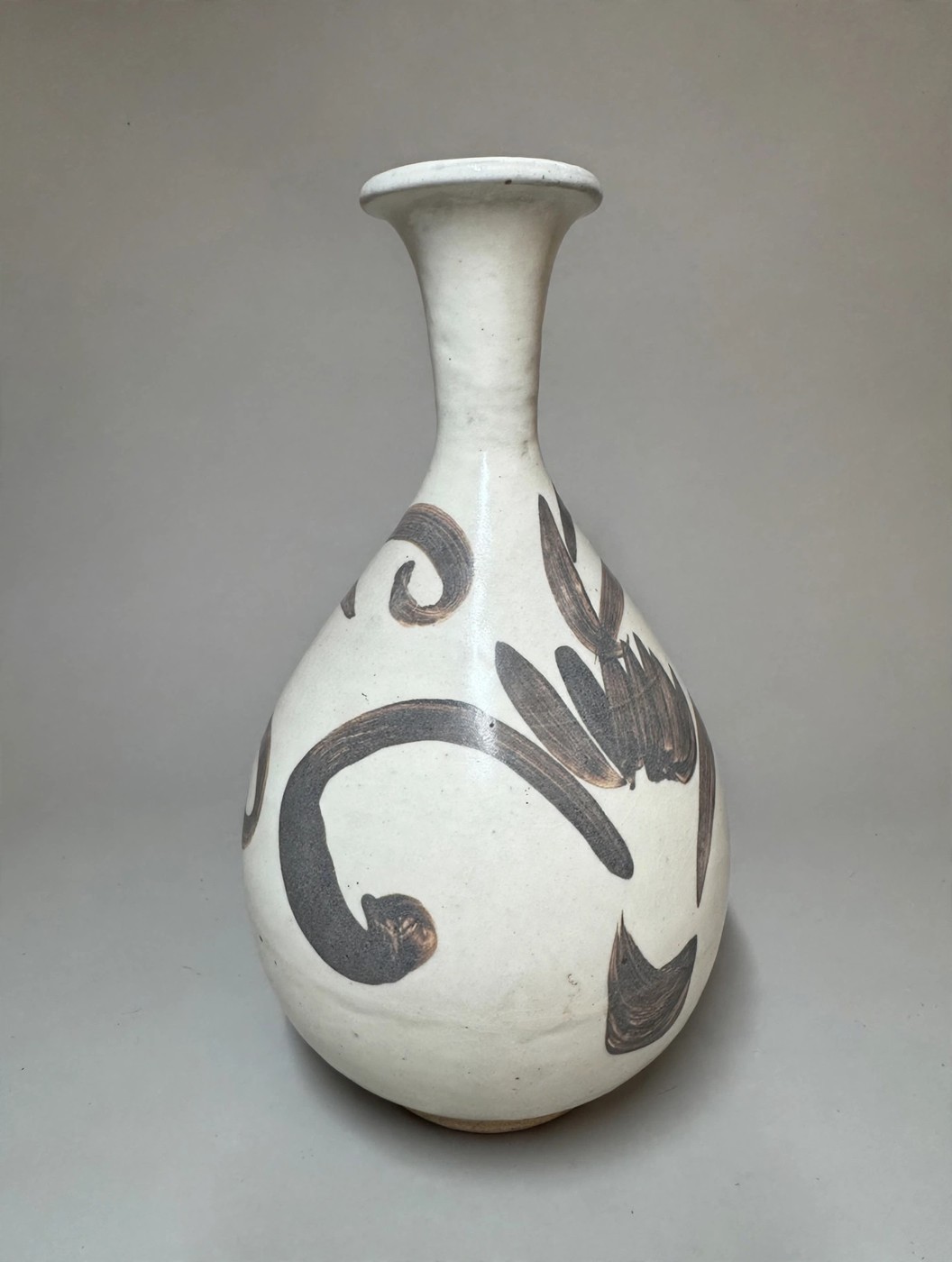
Cizhou ware: painted stoneware from northern China
Cizhou ware is the painted stoneware of northern China: bold, free brushwork in iron-brown over white slip, made for everyday use and loved by collectors for its spontaneity. This guide covers the kilns, the painting, and the yuhuchunping vase we have for sale.
The Cizhou kilns
Cizhou is the name of a group of kilns in northern China, centred on modern Cixian in Hebei, that fired stoneware from the Song dynasty through the Yuan and beyond. Unlike the imperial kilns, which made refined porcelain for the court, the Cizhou kilns made sturdy, practical wares for ordinary people, and decorated them with a freedom that court wares never had.
White slip and iron-brown
The classic Cizhou technique is to cover the grey stoneware body in white slip, then paint on it in iron-brown before glazing. The brushwork is quick and confident: a few broad sweeps of the brush make a leaf, a flower, a bird. Our yuhuchunping below is painted this way, with a bold scrolling leaf design in just a few strokes. No two Cizhou pieces are ever alike.
Forms: yuhuchunping and more
The most famous Cizhou form is the yuhuchunping, the pear-shaped jade spring vase made to hold wine. Cizhou kilns also made pillows, bowls, jars and vases, often with cut or carved decoration under the slip. Because the wares were made for daily use, they are usually sturdy and well-potted, and they survive in good numbers, which is why Cizhou is one of the most accessible ways to collect Song and Yuan ceramics.
Buying Cizhou ware
Cizhou is collected for its brushwork, so look for painting that is bold and fluent rather than hesitant or fussy. Later copies tend to be over-neat. Check the foot and the base, which are usually unglazed and show the grey body. Our yuhuchunping, at $2,500, is a fine example of the Jin to Yuan period, with a bold leaf design and a Japanese private collection provenance.