Early Chinese pottery: Qin and Han dynasty
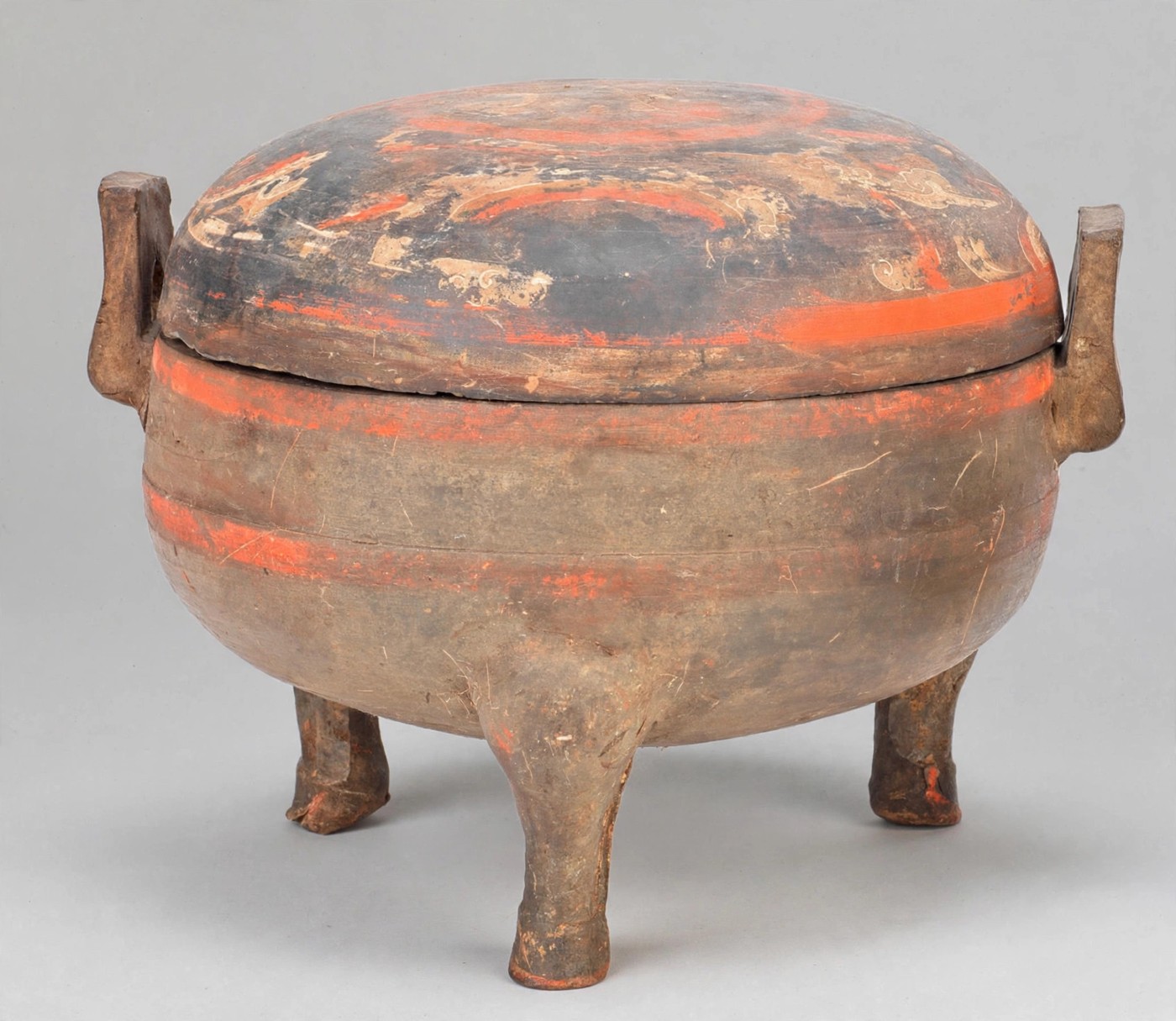
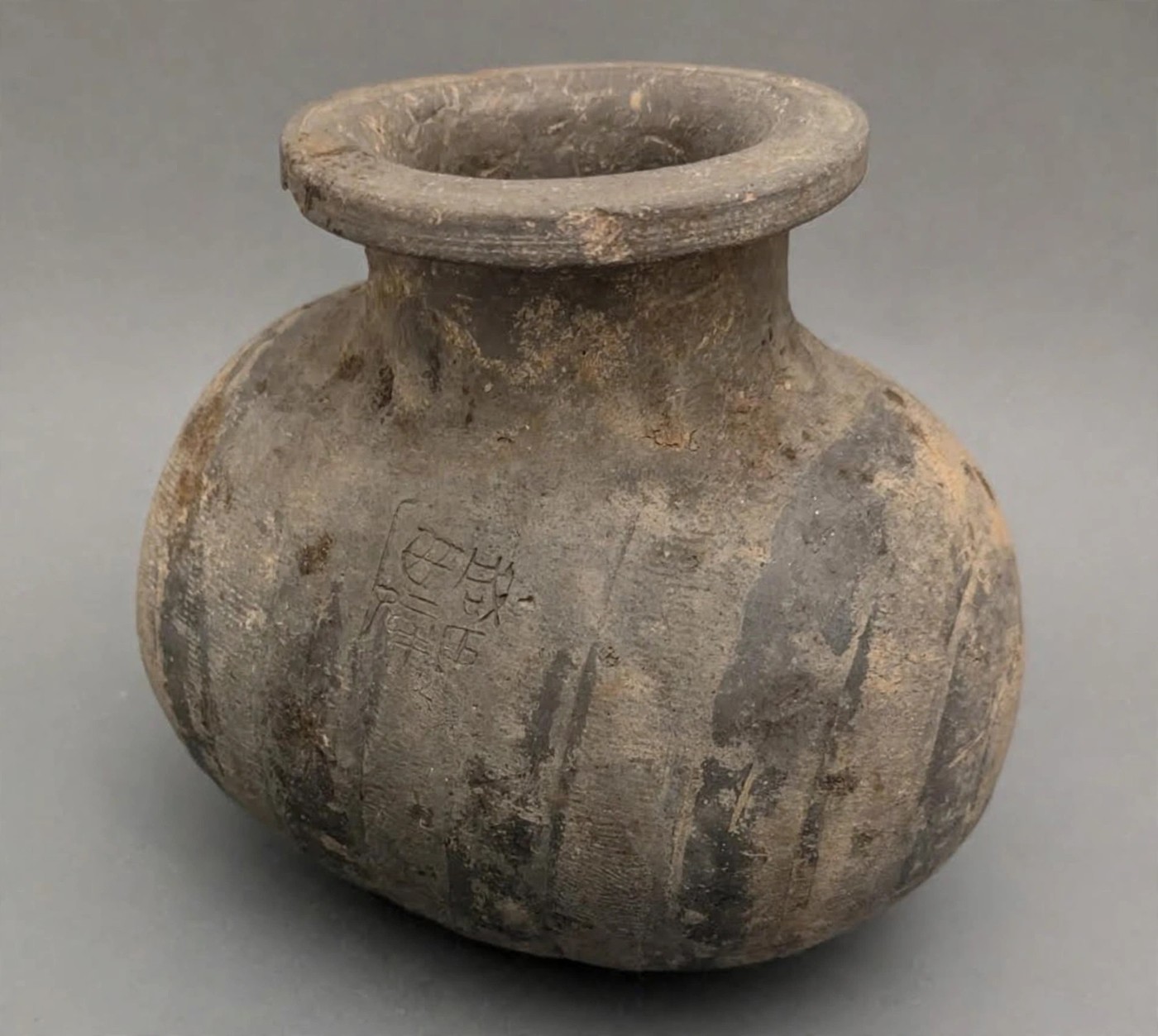
Long before porcelain, China made pottery: grey, painted, and burnished. The Qin and Han dynasties made it in astonishing quantity for the tomb. This guide covers the two early pieces we have for sale: a Qin cocoon jar with a potter's seal, and a painted Han ding.
Qin pottery and the cocoon jar
The Qin dynasty lasted only fifteen years (221–207 BC), but its pottery is distinctive. The cocoon jar, named for its elongated, cocoon-like shape, was made to hold wine or water, its body moulded with lengthwise grooves. Our jar carries an impressed seal on the shoulder reading Xianchen Xipi, a potter's mark referring to the kiln. An almost identical jar is in the Ningxian Museum, where it is classified as a Grade-Two cultural relic.
Han pottery and the ding
The Han dynasty (202 BC–AD 220) buried its dead with pottery versions of the bronze vessels they had used in life: ding tripods, jars, stoves, whole model estates, so that the dead could continue to live as they had. Our ding is painted in red and white pigments, with swirling cloud scrolls on the cover. Painted Han pottery is fragile, and pieces with their paint well preserved are the most sought after.
Tomb wares
Most early Chinese pottery comes from tombs, which is why it survives at all: it was made to be buried, not used. That also means it often survives in remarkable condition, with its paint intact. Buyers should be aware of the rules: the United States restricts the import of certain archaeological objects from China, and we keep the provenance documents that show our pieces were outside China before those restrictions applied.
Buying early Chinese pottery
Early pottery is the most affordable way into Chinese antiquities: our ding is $400, our cocoon jar $1,750, but it rewards knowledge. Look for a good, old surface, paint that sits in the surface rather than on top of it, and a clear provenance. We describe every piece in full, including the small firing hole in the base of our cocoon jar, which is as made.