How to tell real Goryeo celadon
Goryeo celadon is the most faked Korean ceramic, and the copies are getting better. This guide covers the four things to check before you buy: the inlay, the glaze, the foot, and the overall feel of the piece.
The inlay
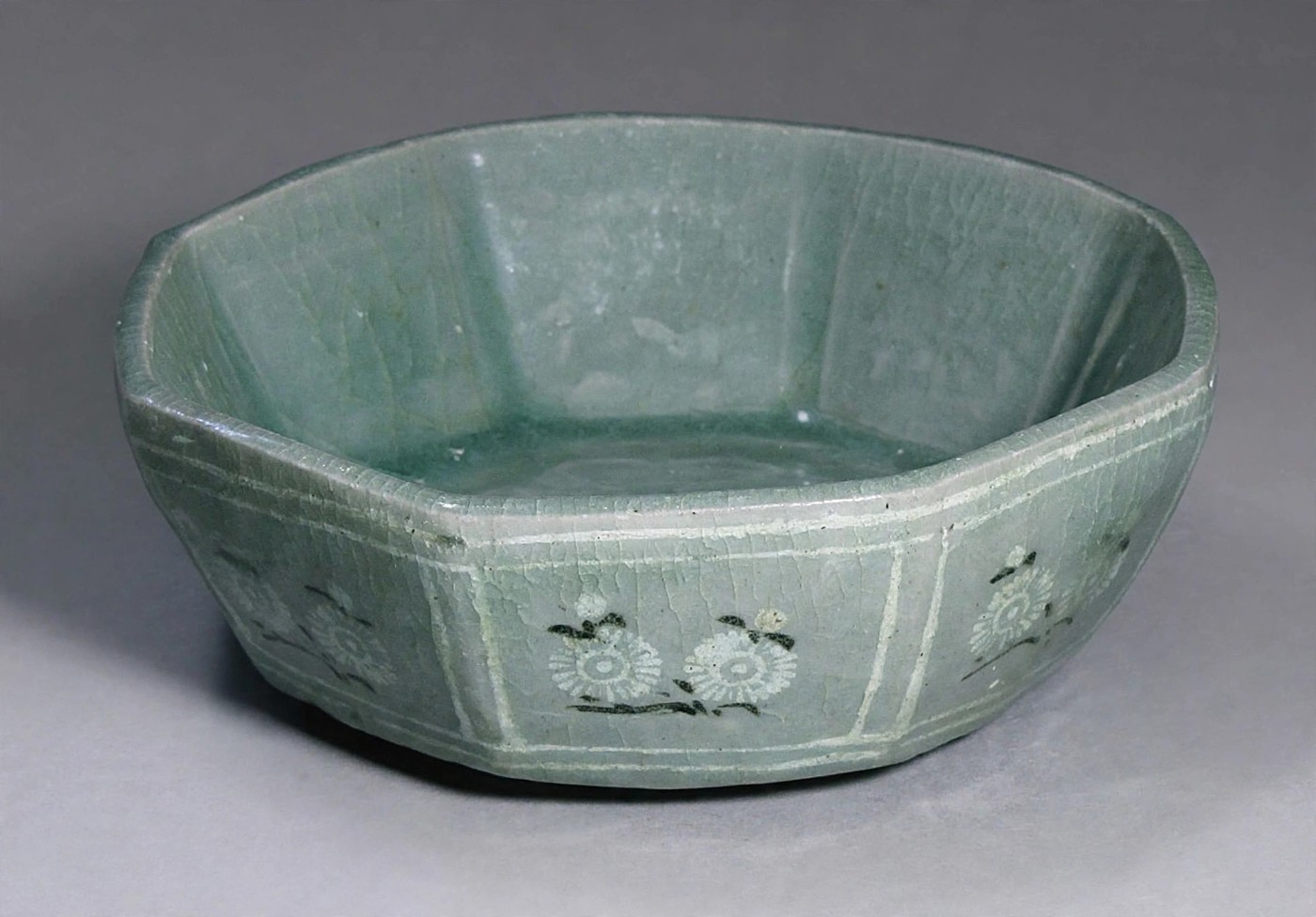
Real Goryeo inlay is carved into the clay and filled with slip before glazing, so the pattern sits under the glaze and has soft, slightly uneven edges where the slip filled the carved lines. On copies, the design is often painted on top of the glaze, or printed, and it looks too sharp and too perfect. Run your finger over the surface: genuine inlay is smooth, because it was scraped flat before glazing.
The glaze
Goryeo glaze is a soft grey-green, often with a slightly cloudy or misty quality, and it pools a little thicker in recessed areas. Later copies, including 20th-century Korean revival wares and modern Chinese copies, are often a brighter, clearer green, or too even. The glaze on a genuine piece has depth; it looks as if you could see into it.
The foot and the base
Turn the piece over. Goryeo dishes and bowls usually have a neatly trimmed foot ring, often with a few small spur marks from the kiln, and the unglazed base shows the grey stoneware body. A base that is too clean, too white, or covered in glaze is a warning sign. Old pieces also show wear on the foot ring from centuries of handling.
The overall feel
Finally, trust the piece as a whole. Genuine Goryeo celadon is light for its size, finely potted, and balanced: it sits well in the hand and on the table. Copies often feel heavy, or clumsy, or too regular. And when in doubt, buy from a dealer who guarantees what they sell: our octagonal dish, at $2,100, is described in full and guaranteed as described without time limit.